New Beginning Animal Sanctuary


Amphibians
Amphibians are ectothermic, anamniotic, four-limbed vertebrate animals that constitute the class Amphibia. In its broadest sense, it is a paraphyletic group encompassing all tetrapods, but excluding the amniotes.
Scientific name: Amphibia
Class: Amphibia; Gray 1825
Phylum: Chordata
Kingdom: Animalia
Clade: Batrachomorpha

Frogs & Troads
Tailless amphibians with smooth skin, strong legs for jumping, and webbed feet for swimming.
Toads-
-
Amphibians that typically have rough, bumpy skin, shorter legs, and a more terrestrial lifestyle than most frogs.
Salamanders & Newts
-
Often have a lizard-like appearance with slender bodies, tails, and short limbs.
Newts-A type of salamander that spends time in water to breed but often lives in woodlands or grasslands the rest of the year.
Caecilians
Limbless, worm-like amphibians that are native to tropical areas and spend most of their lives underground
Axotlol
Who Could Say No To A Face Like That
Axolotls are very charming little creatures, commonly kept as pets in the aquatic or exotic pet hobbies. Axolotls, otherwise known as Mexican walking fish, are not fish at all and are actually neotenic Salamanders. This means that they remain in the aquatic juvenile-like state, keeping their external feathery gills throughout their entire lives, but are still able to grow large, reach sexual maturity and breed.

Axolotls generally grow to around 20-30cm (8-12"), although specimens of up to 45cm (18") have been recorded. Therefore, despite not being particularly active pets, they do require an enclosure with a good amount of space, especially if you're adding other Axolotls as tank mates.
The footprint of an Axolotl tank should take priority over the water volume. We recommend a 90cm (3ft) aquarium for a single adult, or a 120cm (4ft) aquarium for a pair of fully grown adult Axolotls. Young Axolotls can be housed in a smaller 60cm (2ft) aquarium, but this would need to be upgraded as the Axolotl reached maturity.
A new Axolotl tank should be treated in the same way as a new aquarium for fish, and should be cycled with ammonia for 6 to 8 weeks before introducing your new Axolotl, regularly testing the water until the ammonia and nitrites consistently remain at 0ppm, and you can begin to see the presence of nitrates - this means your filter is fully cycled and colonised by beneficial nitrifying bacteria.
Axolotls, unlike many terrestrial amphibians, do not require any specific lighting. A standard aquarium light to provide a day/night cycle will suffice, although they don't tend to like too much bright light, so it is best to keep it on a lower setting.
The ideal water temperature for an Axolotl aquarium is between 15-18°C (59-64°F), which means that in most instances, no heater is required. Most aquariums will come as a full kit, and already include a heater, in which case, it is worth keeping hold of in the event of a drastic temperature drop that may bring the water temperature lower than optimum.
Axolotls are very sensitive to poor water quality, and can make for quite messy pets. It is, therefore, a particularly important part of Axolotl care to provide adequate filtration to your Axolotl's tank.
Again, most aquariums are sold as kits and will come either with a drip filter system installed or with their own internal or external filter, which will already be rated for the water volume of the tank, although it is important to ensure the water flow remains steady and not too high, as Axolotls do not enjoy a strong water flow.
Axolotl water parameters
The required pH range for Axolotls is between 6-8, meaning a neutral pH is ideal. Chlorine, chloramine and ammonia should remain at 0ppm, with nitrates remaining below 10ppm ideally. General hardness should remain between 7-14GH and carbonate hardness between 3-8KH.
This means that in most instances tap water can be used for water changes, although it is important that all tap water is treated with an Aloe vera-free dechlorinator to remove chlorine and chloramines, which can not only be harmful to your Axolotl's permeable skin, but will kill your beneficial filter bacteria too.
Axolotl substrate
Substrates are a slight area of debate for Axolotls. They don't have the best eyesight and will often ingest substrate during feeding times, which can be dangerous when the substrate particles are too large to pass. This means that substrate should either not be used at all, or should only be sand of a fine grain size, that can easily be passed.
A bare bottom tank will be easier to keep clean, but will be less aesthetically pleasing. Whereas, a tank with a fine sand substrate can be planted with live plants and aquascaped to produce a more attractive display set-up.
Axolotl tank decoration
Axolotls don't need too much in the way of tank decoration, the main priority is hiding areas. You should provide your Axolotl with a few caves along the length of the aquarium, along with a cover from either a few live or artificial plants at a minimum (the more cover, the better), although it is important to select broadleaf plants, as those with more fine, spindly leaves can get entangled in an Axolotl's gills.
Axolotl diet and uneaten food
Axolotls feed primarily on animal material, which means they are carnivores, possessing poor eyesight but a keen sense of smell. They should be fed a varied diet of Axolotl pellets, large earthworms, bloodworm and other commercially available frozen fish foods, such as cockles and mussels. It is important to remove any uneaten food fairly quickly, as when the food is left in for too long, it can have a detrimental effect on your water parameters.
Axolotl breeding
It isn't a difficult task to breed Axolotls, although the breeding of any animal should not be taken lightly. The exotic pet market is flooded with animals with poor genetics, bred by beginners from animals with underlying genetic issues. Due to this, we recommend avoiding breeding at all costs, unless you are extremely experienced and your animals are in perfect health.
To breed Axolotls, you must first be able to sex them. Male Axolotls have a large, swollen cloaca (the vent between the end of their body and the beginning of their tale), whereas female Axolotls will have a flat, unpronounced cloaca.
Axolotls generally reach sexual maturity at around 12 months old, although it is recommended to wait until they are around 18 months old and fully grown before attempting breeding, to avoid too much stress on the smaller bodies of younger Axolotls.
In nature, Axolotls breed during the crossover between Winter and Spring, so to induce breeding in captivity, you should perform a partial water change with water colder than that in the tank, to mimic natural seasonal changes and get them in the mood. Once you have done this, your Axolotls should breed readily.
The male will court the female, and if she is interested, he will deposit sperm sacs (spermatophores) onto a surface, where the female collects them, fertilising the eggs that she is already carrying.
Over the next 1-3 days, the female will deposit up to 1,500 fertilised eggs across the aquarium, usually on decor or plants. These should be removed as soon as they're noticed, as the parent is likely to eat the eggs if not. Place the newly laid eggs into a holding tank, with the parameters matching that of the adult tank, and wait. Eggs kept at the higher end of the required temperature range will hatch slightly faster than those kept at the cooler end of the range.
Hatchling care is similar to that of adults, although on a smaller scale. Keep water parameters the same, and offer them their first feed of small live food items such as Daphnia or Brine shrimp. Hatchling Axolotls have a proclivity towards cannibalism, so ensure you offer them plenty of food regularly, twice a day is best.
Once they start to develop limbs, care can switch to that of an adult Axolotl, and they should readily take non-live food items, whilst being less inclined to prey on their siblings.
Alternative species
The Axolotl is an extremely unique animal and an even more unique pet. This means that when it comes to alternative species, nothing comes close, and it ultimately depends on what attracted you to Axolotls in the first place.
If it was their aquatic nature, perhaps a Budgett's frog, or African dwarf frog, or even just a community aquarium might be a good choice.
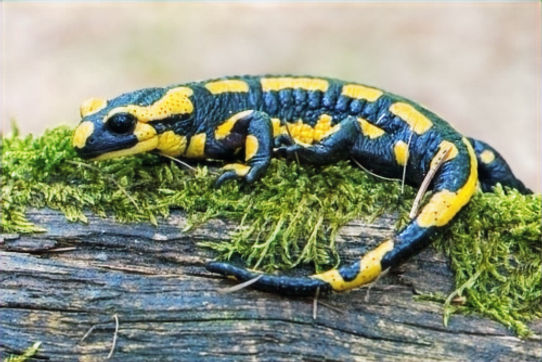
If their looks initially intrigued you, maybe another Salamander species could be of interest, such as the terrestrial Fire salamander.
Salamanders
Salamanders are lizard-like amphibians. Despite their appearance, salamanders are amphibians, not reptiles. However, like reptiles, amphibians are ectothermic (or “cold-blooded”) animals that rely on external heat sources to regulate their body temperature.
The largest land-dwelling salamander in the world is the tiger salamander. These salamanders build burrows in marshes, woodlands, and meadows throughout North America.
Tiger salamanders are not a single species; rather, they are a collection of closely related subspecies with varying patterns and colors. Usually, young salamanders begin life with a spotted pattern, which changes as they grow into adulthood.
Tiger salamanders’ bodies are adapted to living underground—they’re stout with small eyes and strong legs for digging and burrowing.
Newly homed tiger salamanders may bury themselves in their substrate. Once they realize food is at the surface, they will relax and will eventually become more docile.
When bred in captivity, tiger salamanders are robust, social amphibians that make excellent pets.
Compared to females, male salamanders are thinner, have flatter tails, and a more prominent vent.
Difficulty of Care
Beginner
Average Lifespan
Up to 15–25 years with proper care, depending on species
Average Adult Size
11+ inches long
Diet
Carnivore
Minimum Habitat Size
15-gallon tank for one adult
The minimum recommended habitat size for a salamander varies, depending on species and the number of animals in the enclosure:
-
A salamander needs at least a 15-gallon glass, acrylic, or plastic tank for their habitat.
-
If choosing to house two salamanders, you’ll need at least a 20-gallon tank.
All habitats should be well-ventilated and secured with a screened lid to prevent the animal from escaping. They should also be longer than they are tall to give amphibians enough room to explore.
With proper care, salamanders reach their adult size within a year. Always provide the largest habitat possible. Be sure to increase the enclosure’s size as the animal grows.
Mentioned in this Article
Several tiger salamanders can be housed together in the same habitat if the enclosure is large enough and the animals are not territorial.
Salamanders must be monitored for aggressive behavior. If two animals fight, separate them. Never keep different species of amphibians in the same habitat (i.e., do not keep tiger salamanders in the same habitat as fire bellied newts).
Simone Woods
"
Tiger salamanders need a tank temperature from 60 F to 75 F. Do not allow the enclosure’s temperature to go above 78 F—higher temperatures can lead to stress and illness.
Most pet salamanders will not need a supplemental heat source if the habitat’s temperature is kept above 60 F. Keep the habitat out of direct sunlight, which can cause temperature fluctuations and encourage algae growth. Use a thermometer to monitor the habitat’s temperature.
Nicole Yang
Salamanders should get 10–12 hours of light exposure daily with the help of a low-watt incandescent bulb. This will imitate natural sunlight and help the animal establish a day/night cycle. Make sure that the bulb does not produce a lot of heat and raise the habitat’s temperature outside of the ideal range (60–75 F).
Some light bulbs provide not only light to the tank but also heat and/or ultraviolet (UV) light. Pet parents should check the light sources to be clear of their function in the tank.
Remember: Salamanders must have access to lots of hiding places so they can escape the light or heat when needed.
White lights should not be left on continuously, as they will disrupt the salamanders sleep cycle and negatively affect its overall health. At night, turn off lights inside the enclosure.
Salamanders need exposure to ultraviolet (UV) light to produce vitamin D in their skin so they can absorb dietary calcium, which is essential to bone health. Without adequate UV exposure, they can develop metabolic bone disease.
Use a low-level (2.0 or 5.0) UVB bulb to provide the salamander with 10–12 hours of UVB light daily.
Avoid bulbs that emit higher levels of UVB light; they can damage amphibians' eyes and skin.
Replace bulbs every six months (even if they still emit light) as their potency wanes over time.
A day/night timer can make it easier to maintain a consistent day and night cycle.
Calvin Smith
Salamanders should be offered a variety of gut-loaded insects and worms as a base diet. These amphibians can also be fed live or frozen/thawed bloodworms, brine shrimp, and tubifex worms, plus supplemental amounts of dry food formulated for salamanders/newts.
Large salamanders can also be occasionally fed frozen/thawed pinkie or fuzzy mice as a treat.
Feeding Guidelines
-
Juvenile salamanders need to be fed every one to two days and adult salamanders need to be fed two to three times a week at nighttime.
-
Tiger salamanders are prone to obesity, so they should only be fed high-fat foods (like waxworms) in limited amounts.
A well-balanced and nutritious diet for a salamander consists of a base diet of gut-loaded (recently fed) insects and worms, including:
-
Crickets
-
Earthworms
-
Beetles
-
Roaches
-
Superworms
-
Waxworms
-
Silkworms
-
Hornworms
-
Phoenix worms
-
White worms
-
Feed a variety of insects rather than the same ones every day. As with humans, feeding amphibians the same food every day can cause malnutrition.
-
Avoid feeding mealworms, as they have a hard exoskeleton that’s difficult to digest.
-
Bloodworms, brine shrimp, and tubifex worms (frozen/thawed or live) may be offered in the water.
-
Some large salamander species, including tiger salamanders, can also eat a frozen/thawed “pinkie” or “fuzzy” mouse as an occasional treat.
-
Live rodents should not be fed to salamanders. While still alive, rodents can become aggressive and leave severe wounds that lead to life-threatening infections.
-
Frozen rodents should never be microwaved, as this can leave “hot spots” that can burn a salamander's mouth and tongue.
Suzanne Levis
Tree Frogs & Dart Frogs
Dedication. Expertise. Passion.
This is your Team section. It's a great place to introduce your team and talk about what makes it special, such as your culture or work philosophy. Don't be afraid to illustrate personality and character to help users connect with your team.


